Mimicking the Human Brain
For decades, the ambitious dream of creating machines that can think, learn, and perceive the world just like humans has been the primary driving force behind the entire field of Artificial Intelligence (AI). While earlier AI systems often relied on explicit, meticulously hand-coded rules and strict logic, they consistently struggled with the overwhelming complexity and inherent ambiguity of real-world, unstructured data. Such difficult tasks included accurately recognizing faces in a crowd or correctly interpreting nuances in natural human language. This critical limitation was finally overcome by the profound breakthrough of Neural Networks.
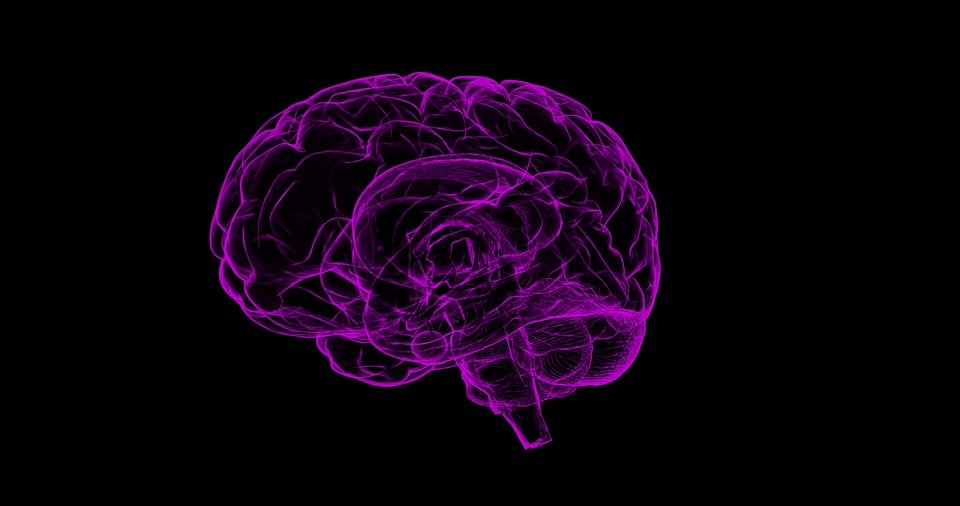
These networks are essentially a sophisticated computational model directly inspired by the intricate structure and complex function of the biological human brain. Crucially, these advanced networks are not meticulously programmed with specific, rigid rules for every possible task. Instead, they are intelligently designed to learn directly from massive amounts of raw data.
This learning is achieved by systematically adjusting the strengths of connections between their thousands of interconnected virtual “neurons.” This immensely powerful, flexible approach is known broadly as Deep Learning. It has successfully catalyzed an unprecedented revolution across the digital landscape. It has enabled truly unprecedented achievements in complex pattern recognition, reliable complex prediction, and even creative tasks.
Deep Learning is fundamentally reshaping nearly every major industry, from advanced healthcare and high finance to transportation and modern entertainment.
The Anatomy of a Neural Network
A Neural Network is fundamentally a collection of interconnected nodes, or artificial neurons, meticulously organized into distinct and functional layers. Information reliably flows in one direction through these layers, consistently undergoing mathematical transformations at each individual step.
This distinctive layered structure is what allows the network to gradually learn increasingly complex and abstract internal representations of the raw input data. The specific, unique architecture of the network fundamentally defines its ultimate function and computational power.
A. Neurons and Activation Functions
The most fundamental, indispensable building block of any functional neural network is the individual Neuron (or node). This basic unit is responsible for receiving input, precisely processing it, and ultimately transmitting a final output signal to the next layer.
-
Each individual neuron systematically receives numerical inputs from the collective neurons in the previous, adjacent layer. These numerical inputs are crucial values. Each input value is multiplied by an associated Weight, which accurately reflects its current importance or influence.
-
All the carefully weighted inputs are arithmetically summed together. A numerical value called a Bias is then added to this total sum. This final calculated total becomes the neuron’s net input value.
-
The net input is then passed through a non-linear Activation Function (common examples include ReLU or Sigmoid). This essential function determines the neuron’s final output signal and introduces the necessary non-linearity. This non-linearity is absolutely essential for enabling the network to learn complex, non-linear patterns.
B. The Layered Structure
Neural networks are typically and structurally organized into at least three distinct types of computational layers. This specific organization is what formally defines the “depth” of the entire deep learning process.
-
The Input Layer is the first layer. It receives the initial raw data, such as the individual pixel values of an image or the sequential words in a sentence. It intentionally does not perform any complex computation, only passing the raw data forward to the next layer.
-
The Output Layer is the last layer. It produces the final result of the network’s entire computation. For a classification task, it will output the calculated probability of the input accurately belonging to the different predefined categories.
-
Hidden Layers are positioned structurally between the input and output layers. In the specific context of Deep Learning, there are multiple hidden layers, each specialized layer learning more abstract, high-level features of the complex input data.
C. Weights, Biases, and Parameters
The entire comprehensive knowledge base and memory of a neural network are meticulously stored in its Parameters. These parameters are the critical numerical values that the network must systematically adjust and optimize throughout the long learning process.
-
Weights numerically represent the strength and influence of the connection existing between two adjacent neurons. A large positive weight value means that the input strongly encourages the neuron to successfully activate.
-
Biases are constant numerical values that allow the activation function to shift its output independently of the exact input data values. They are vital for giving the network maximum flexibility in accurately modeling complex data distributions.
-
The ultimate, singular goal of the training process is efficiently finding the optimal combination of weights and biases. This precise combination must reliably minimize the network’s prediction error across the entire provided training dataset.
The Learning Process: Training the Network
The inherent intelligence and learned skill of a neural network are not explicitly pre-programmed by humans. Instead, this intelligence is acquired through a process of rigorous, repetitive, iterative training. This essential learning process is mathematically driven by systematically minimizing the network’s prediction errors over time.
This powerful, critical process involves consistently feeding the network data, precisely calculating its resulting errors, and methodically adjusting its vast internal parameters. The iterative nature ensures continuous refinement.
A. Loss Function and Error Calculation
The intensive training process fundamentally begins by defining a clear, precise way to quantify exactly how poorly the network is currently performing on its given task. This crucial quantitative measure is formally known as the Loss Function (or Cost Function).
-
The loss function’s sole purpose is to calculate the precise numerical difference between the network’s current predicted output and the true, known, correct target value present in the training data. This calculated difference is precisely the Error.
-
For general regression tasks (predicting continuous values), the Mean Squared Error (MSE) is often reliably used. For categorical classification tasks, the Cross-Entropy Loss is common. This loss function heavily penalizes incorrect, confident predictions.
-
The overarching, global objective of the entire training algorithm is to efficiently find the definitive set of weights and biases. This set must reliably and globally minimize this total loss function value across the entire training dataset.
B. Gradient Descent and Optimization
The network utilizes a powerful iterative optimization algorithm called Gradient Descent. This algorithm is used to systematically navigate the complex, multi-dimensional landscape of the loss function. Its goal is reliably finding the minimum error point in that space.
-
The “gradient” is the complex slope of the loss function at a particular point. It precisely indicates the direction and magnitude of the steepest possible increase in the network’s error.
-
Gradient Descent works by methodically moving the parameters (the weights and biases) in the exact, mathematical opposite direction of the gradient vector. This ensures the network always consistently moves downhill toward lower and lower error values.
-
The specific size of the steps taken downhill in each iteration is carefully controlled by the Learning Rate, which is a critical, pre-set hyperparameter. Finding the optimal learning rate is the single most important factor for achieving efficient and stable training.
C. Backpropagation: Distributing the Error
Backpropagation is the most famous, ingenious, and essential algorithm that truly enables the efficient training of deep, multilayer networks. It successfully solves the immensely difficult problem of accurately assigning credit or blame to the thousands of interconnected weights within the internal hidden layers.
-
The backpropagation process involves precisely calculating the proportional error contribution of each individual neuron within the network. This calculation starts strictly from the output layer and meticulously propagates the computed error backward through the network, one layer at a time.
-
This essential backward pass accurately determines exactly how much each individual weight needs to be numerically adjusted. The adjustment is strictly based on that weight’s proportional contribution to the final, observed output error.
-
Backpropagation, when seamlessly combined with the Gradient Descent optimization algorithm, is the computational core and engine that fundamentally makes deep learning practical, fast, and scalable. It efficiently computes the necessary partial derivatives for all the network’s many parameters.
Architectures of Deep Learning

The true, transformative power of the deep learning revolution largely comes from the development of highly specialized network Architectures. These are specifically designed to handle specific types of complex, unstructured input data both efficiently and effectively.
These unique, custom-designed architectures have successfully allowed deep learning to finally achieve human-level performance across many diverse, challenging scientific and industrial fields.
A. Convolutional Neural Networks (CNNs)
Convolutional Neural Networks (CNNs) were rigorously and specifically designed to effectively process data that naturally possesses a known grid-like structure. They are the undisputed, reigning champions of all image processing tasks and advanced computer vision applications.
-
The core, defining innovation of the CNN is the Convolutional Layer. This layer utilizes small, shared filters (kernels) that systematically slide across the input data (such as the pixels of an image). This crucial sharing dramatically reduces the total number of required network parameters.
-
This architecture excels inherently at automatically learning spatial hierarchies of crucial features. For instance, the first network layers learn simple edges, and subsequent layers gradually learn more complex shapes, textures, and ultimately, identifiable complex objects.
-
CNNs power modern, ubiquitous applications such as facial recognition systems, the complex vision systems in self-driving cars, and highly accurate medical image analysis. They consistently demonstrate unparalleled accuracy in these challenging visual tasks.
B. Recurrent Neural Networks (RNNs)
Recurrent Neural Networks (RNNs) were intelligently designed to effectively handle sequential data, where the specific temporal order of the information is critically important. This unique design makes them ideally suited for natural human language processing (NLP) and precise time series analysis.
-
RNNs introduce a specific Recurrent Connection or internal loop into their structure. This connection allows information processed from the previous time step to directly influence the new calculation at the current time step. This action gives the network a crucial form of short-term internal “memory.”
-
While potentially powerful, simple, basic RNNs often struggle significantly with capturing long-term dependencies (meaning remembering crucial information from many steps in the past). This limitation is scientifically known as the destructive Vanishing Gradient Problem.
-
This fundamental memory problem immediately led to the rapid development of more advanced, superior variants. Most notably, these included Long Short-Term Memory (LSTM) networks and Gated Recurrent Units (GRUs). These advanced networks are far better at successfully retaining and utilizing information over long temporal sequences.
C. Transformer Networks
The innovative Transformer Architecture is the most recent and arguably the single most impactful advancement in the entire field of deep learning. It has completely and rapidly dominated the field of natural language processing (NLP). This architecture is currently the primary driving force behind the global boom in large-scale generative AI applications.
-
The key, revolutionary innovation within the Transformer is the sophisticated Attention Mechanism. This unique mechanism allows the network to dynamically and selectively weigh the importance of different parts of the input sequence. Crucially, it does this irrespective of their absolute physical distance from each other in the sequence.
-
Unlike its predecessor, the RNN, the Transformer fundamentally processes all input elements simultaneously at once. This essential capability allows for massive parallelization of the computation. This results in dramatically faster and more efficient training on specialized hardware.
-
Transformer-based models, such as GPT (Generative Pre-trained Transformer) and BERT, are directly responsible for the impressive capabilities seen in modern large language models (LLMs). They enable near human-like text generation, sophisticated translation, and complex reasoning.
Challenges and Considerations in Deep Learning
Despite the demonstrated extraordinary power of deep learning systems, they still face significant technical, resource-based, and complex ethical challenges. Researchers across the globe are actively working to rigorously address and overcome these limitations.
These ongoing challenges highlight the crucial fact that deep learning, while profoundly revolutionary, is not a perfect or universally applicable solution for every single type of computational problem.
A. Data Dependency and Data Hunger
Deep learning models, especially the very large-scale models like the modern Transformers, are notoriously Data Hungry consumers of information. Their measurable performance scales almost directly and linearly with the sheer size and verified quality of the training data provided to them.
-
Successfully training these massive models requires extensive access to enormous, often proprietary, and expensive datasets. This requirement can create a significant financial and resource barrier for smaller institutions, startups, or individual academic researchers.
-
The resulting final model is often only as reliable and accurate as the raw data it was originally fed during training. If the input data is fundamentally flawed, statistically biased, or grossly incomplete, the model will inevitably and faithfully reproduce those specific shortcomings in its outputs.
-
The intensive tasks of collecting, meticulously cleaning, and accurately labeling these massive datasets is one of the most resource-intensive, expensive, and time-consuming parts of any large-scale deep learning project.
B. The Black Box Problem
A fundamental and serious criticism consistently leveled against complex deep learning models is their noticeable lack of Interpretability or transparent Explainability. Due to this opacity, they are commonly and accurately referred to as “Black Boxes.”
-
Because of the millions or billions of non-linear connections spanning many hidden layers, it is currently nearly impossible for a human to accurately trace the precise path of a decision or prediction. We can reliably see what the model predicts, but not consistently and reliably why it arrived at that specific conclusion.
-
This profound lack of transparency poses major, unacceptable risks in critical, high-stakes domains such as advanced medicine, high-frequency finance, and the criminal justice system. In these fields, clear, justifiable explanations for decisions are legally, socially, or ethically mandated.
-
The growing field of Explainable AI (XAI) is a vital area of research. It is dedicated to developing new techniques to peer inside the computational black box and provide meaningful, trustworthy justifications for a model’s outputs and predictions.
C. Computational Cost and Environmental Impact
The intensive process of training and subsequently running the largest, most advanced deep learning models demands colossal amounts of energy and computational power. This substantial demand raises significant concerns regarding both the monetary cost and the overall environmental sustainability of the practice.
-
State-of-the-art models require large clusters of powerful, specialized GPUs (Graphics Processing Units) or TPUs (Tensor Processing Units) running continuously for weeks or sometimes many months. This required high-level energy consumption is substantial and adds up quickly.
-
The measured electricity usage and the corresponding carbon footprint generated by fully training a single large language model can, in some cases, be comparable to the entire lifetime carbon emissions of several average automobiles.
-
Researchers are increasingly focusing efforts on developing more Energy-Efficient Architectures and specialized techniques like Model Compression. The goal is to significantly reduce the resource demands without having to sacrifice too much of the model’s predictive performance.
The Broader Impact and Future of AI
Deep learning has successfully transitioned from a purely theoretical, academic concept to a widely applied, practical technology. It is now actively driving advancements that are woven inextricably into the very fabric of daily life and directly charting the course for the next generation of intelligent AI systems.
The innovative fusion of deep learning principles with other computational fields is actively leading to the creation of truly intelligent, generalized-purpose AI.
A. Generative AI and Creativity
One of the most disruptive and widely felt impacts of the deep learning revolution has been the explosion of highly creative Generative AI. These sophisticated models can now rapidly create entirely new, original content that is often completely indistinguishable from high-quality human creations.
-
Generative models, such as DALL-E (for photorealistic images) and ChatGPT (for complex text), are trained to understand highly complex data distributions. They can then expertly sample from these learned distributions to produce novel, varied outputs.
-
This groundbreaking technology is rapidly transforming various creative industries. It is automating routine design and content creation tasks. It now serves as a powerful creative co-pilot for artists, writers, and software developers globally.
-
The widespread rise of this incredible capability also simultaneously raises serious, new ethical questions. These concerns revolve around intellectual property rights, questions of authorship, and the dark potential for misuse in creating hyper-realistic deepfakes and mass disinformation campaigns.
B. Deep Learning in Science and Research
Deep learning is quickly proving itself to be an absolutely indispensable tool for fundamental scientific research worldwide. It is uniquely capable of tackling long-standing, complex problems that have successfully confounded classical computational methods for many decades.
-
In the field of molecular biology, the system known as AlphaFold demonstrated a massive breakthrough. It successfully used deep learning to accurately predict the three-dimensional structure of proteins from only their amino acid sequence. This scientific achievement dramatically accelerates the process of new drug discovery.
-
In complex physics research, large deep networks are now being used to rapidly and effectively analyze massive data streams generated by particle accelerators and sophisticated telescopes. They help to immediately identify extremely rare events that would otherwise be missed by traditional human analysts.
-
The unique ability of deep learning to reliably find and model highly non-linear patterns in complex data makes it an ideal, powerful partner for scientific hypothesis generation, testing, and ultimate validation.
C. Towards Artificial General Intelligence (AGI)
The ultimate, long-term goal of all AI research is definitively achieving Artificial General Intelligence (AGI). This is a machine system capable of truly understanding, learning, and effectively applying its intelligence to solve virtually any complex problem that a human being can. Deep learning is currently viewed as the single most promising, leading technological path toward achieving this goal.
-
Current, existing models, while undeniably powerful, are still strictly Narrow AI. They excel only at the very specific task they were meticulously trained on for months. AGI requires a much more flexible system that can seamlessly transfer learned knowledge between disparate domains.
-
Future research efforts will urgently focus on designing new models that exhibit much better Common Sense Reasoning and complex Causal Inference capabilities. This represents a significant shift from simply recognizing patterns to truly understanding why things occur.
-
Continued, exponential scaling of the available data, computation power, and novel network architectures, expertly combined with key ideas from cognitive science, is widely expected to be the final catalyst for future, foundational breakthroughs toward realizing true AGI.
Conclusion

Neural Networks and Deep Learning have revolutionized Artificial Intelligence by successfully mimicking the layered, interconnected structure of the human brain to learn directly from complex data. The fundamental units are Neuronswhich apply Activation Functions to weighted inputs, and their collective knowledge is stored in millions of adjustable Weights and Biases. Training is an iterative process driven by minimizing the prediction Error calculated by a Loss Function using the efficient optimization technique of Gradient Descent and the crucial error distribution method called Backpropagation.
The power of AI comes from specialized Architectures: CNNs dominate image analysis using Convolutional Layers, RNNs (and their variants like LSTMs) handle sequential data, and Transformer Networksutilize the Attention Mechanism to fuel the latest generation of Large Language Models.
Despite their success, these systems face challenges related to their Data Hunger, the lack of Interpretability (the Black Box Problem), and the high Computational Cost and subsequent environmental impact. Their future applications are poised to continue transforming science and ushering in an era of advanced Generative AI while researchers pursue the long-term goal of Artificial General Intelligence (AGI).