The Violent End of Massive Suns
The night sky, while appearing serene and unchanging to the casual observer, is actually the stage for the most violent and energetic events in the entire universe. While the vast majority of stars—like our own Sun—will end their lives quietly, gradually swelling into a red giant and then fading into a white dwarf, the most colossal stars face a dramatically different and cataclysmic fate. When stars with masses significantly greater than eight times that of the Sun exhaust their nuclear fuel, the delicate, century-long balance between the outward pressure of fusion and the relentless, inward pull of gravity is abruptly lost.
The core collapses inward at astonishing speeds, resulting in a spectacular Supernova explosion. This brief, intense moment of cosmic violence creates the heaviest elements in the universe, scattering them across the galaxy. More importantly, this process leaves behind one of two incredibly dense, bizarre, and highly compact stellar remnants: the spinning Neutron Star or the ultimate cosmic vacuum, the Black Hole. These objects are the true accelerators of the cosmos. They govern extreme gravity, warp spacetime, and fuel some of the most luminous phenomena observed by astronomers today.
The Origin of Stellar Remnants
The precise nature of the compact remnant left behind after a massive star dies is determined entirely by the mass of the core after the initial supernova explosion has occurred. This final core mass calculation is absolutely critical.
The distinction between a neutron star and a black hole lies in the relentless, final competition. This is the struggle between the overwhelming pull of gravity and the last remaining physical resistance forces within the core.
A. The Chandrasekhar Limit
Before the supernova explosion, the immense gravitational force is primarily held in check by the outward pressure of Electron Degeneracy. This powerful pressure comes from the quantum mechanical principle that no two electrons can occupy the exact same quantum state.
-
Subrahmanyan Chandrasekhar calculated the maximum mass the core of a dying star can have while still being effectively supported by this Electron Degeneracy Pressure.
-
This essential limit, known as the Chandrasekhar Limit, is approximately $1.4$ times the mass of the Sun, or $1.4 M_\odot$.
-
If the stellar core mass is definitively less than this critical limit, the star stabilizes as a White Dwarf, which is a dense but relatively calm and stable remnant.
B. The Oppenheimer-Volkoff Limit
If the stellar core mass significantly exceeds the Chandrasekhar Limit, gravity easily overcomes the electron degeneracy pressure. The collapse of the core continues rapidly until a new, far denser state is dramatically reached.
-
This next crucial state is the Neutron Star, which is supported by the even stronger pressure of Neutron Degeneracy. This is a much more powerful quantum force resisting further collapse.
-
The maximum mass that this neutron pressure can physically support is called the Oppenheimer-Volkoff Limit. Its exact value is still somewhat uncertain, but it is estimated to be between $2$ and $3$ solar masses.
-
Any remnant core mass falling within the range of $1.4 M_\odot$ to about $2.5 M_\odot$ will ultimately stabilize as a neutron star.
C. Formation of Black Holes
If the original stellar core is so massive that the remnant exceeds the Oppenheimer-Volkoff limit, no known fundamental force in the universe can resist the overwhelming inward pull of gravity. The collapse of the core becomes catastrophic and entirely permanent.
-
The core shrinks relentlessly towards a point of infinite density, which is known as a Singularity. Spacetime itself becomes infinitely curved and horribly warped.
-
The resulting object is a Black Hole, defined by its boundary, the Event Horizon. Nothing, not even light, can possibly escape once it crosses this critical boundary.
-
These extreme objects form primarily from the direct gravitational collapse of the most massive stellar cores, typically those above $2.5 M_\odot$.
Neutron Stars: Cosmic Cogs
Neutron Stars are perhaps the most extreme objects in the universe that are not black holes. They are the ultimate embodiment of density, angular momentum, and concentrated magnetic fields.
These objects function as intense cosmic laboratories. They allow physicists to study matter under conditions of gravity and pressure that are completely impossible to replicate on Earth.
A. Extreme Density and Size
A neutron star is essentially one colossal, highly compressed atomic nucleus. It is packed to unimaginable density by its own immense self-gravity.
-
A typical neutron star packs the equivalent mass of $1.5$ Suns into a tiny sphere. This sphere is only about 10 to 12 kilometers in diameter, roughly the size of a large terrestrial city.
-
A single cubic centimeter of neutron star material would weigh billions of tons on Earth. This incredible density is the key, defining physical feature of the object.
-
The star’s structure includes a solid iron crust, a super-fluid core of free neutrons, and potentially even more exotic, unknown phases of matter at the very center.
B. Rapid Rotation (Pulsars)
Because the massive star’s original angular momentum must be strictly conserved during the core’s collapse, the tiny remnant spins at extraordinary, dizzying speeds. This powerful effect is analogous to a figure skater pulling in their extended arms to spin faster.
-
Many neutron stars rotate hundreds of times per second. This leads to rotation periods of mere milliseconds, approaching the speed of light at the surface.
-
If the star’s magnetic axis is misaligned with its spin axis, it emits powerful, narrow beams of electromagnetic radiation from its magnetic poles.
-
When these beams sweep precisely across Earth’s line of sight, astronomers observe rapid, precise pulses. This leads to the designation of these specific objects as Pulsars.
C. Magnetic Fields
Neutron stars also possess the most intensely powerful magnetic fields found anywhere in the entire universe. These fields are billions, or even trillions, of times stronger than the Sun’s magnetic field.
-
The incredible, rapid collapse concentrates the star’s original magnetic field lines into a tiny, dense area. This action massively amplifies its strength to extreme levels.
-
The strongest neutron stars, known specifically as Magnetars, have magnetic fields so intensely powerful that they can instantly strip information from credit cards placed thousands of kilometers away.
-
The eventual decay of these hyper-powerful magnetic fields is thought to be directly responsible for emitting intense bursts of X-rays and gamma rays into space.
Black Holes: Spacetime Distortions
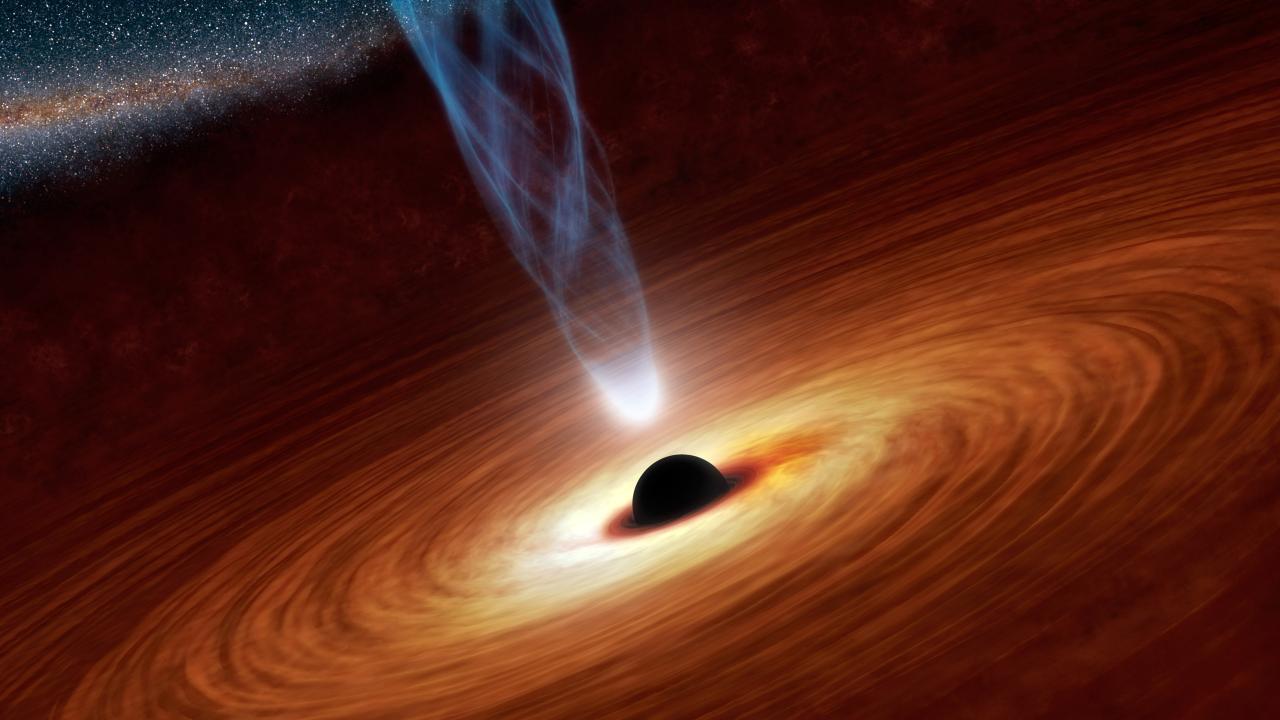
Black Holes are the most powerful and extreme gravitational objects known to existence. They are not empty voids in space, but rather regions of spacetime where the gravitational curvature becomes infinite.
They fundamentally challenge our deepest physical concepts of space, time, and causality. They act as the ultimate, inescapable cosmic boundaries.
A. The Singularity
At the very center of a non-rotating black hole lies the Singularity. This is the mathematical point where all the mass of the collapsed star is crushed into an infinitesimally small volume.
-
The singularity fundamentally represents a true failure point for current physics theories. General Relativity predicts infinite density, which physics currently cannot fully describe or compute.
-
The specific nature of matter and spacetime inside the event horizon remains the greatest, unresolved theoretical challenge in modern physics.
-
The singularity is where gravity truly wins the final battle, resulting in a localized region of infinite spacetime curvature.
B. The Event Horizon
The Event Horizon is the distinct, critical boundary that formally defines the black hole. It is the crucial point of no return for any matter or energy.
-
The precise size of the event horizon is determined entirely by the black hole’s mass. This specific radius is technically known as the Schwarzschild Radius.
-
Once any object, photon, or particle crosses this horizon, it is irrevocably doomed to fall toward the singularity. Its escape velocity now exceeds the universal speed of light.
-
The horizon itself is not a physical surface that you could stand on. It is simply a point in spacetime beyond which all outgoing light paths curve inexorably back toward the singularity.
C. Types of Black Holes
Black holes are categorized primarily by their mass. This reflects the diversity of the astrophysical processes that ultimately create them.
-
Stellar-Mass Black Holes are the most common type of black hole. They are typically 3 to 100 times the mass of the Sun. They form from the direct supernova collapse of individual massive stars.
-
Supermassive Black Holes (SMBHs) lie powerfully at the center of nearly every large galaxy, including our own Milky Way. Their masses range spectacularly from millions to many billions of solar masses.
-
Intermediate-Mass Black Holes (IMBHs) are a still-debated, intriguing category. Their masses fall between 100 and 100,000 $M_\odot$. Their existence and exact formation mechanisms are actively being researched by astronomers.
Accretion and Cosmic Acceleration
Neither neutron stars nor black holes are truly and purely “dark” objects. They are often spectacularly revealed by the powerful, high-energy processes that occur when they interact violently with surrounding matter.
These compact, dense objects act as the universe’s most efficient Cosmic Accelerators. They expertly convert immense gravitational potential energy into intense, observable radiation.
A. The Accretion Disk
When surrounding matter, such as gas siphoned from a companion star, falls toward a black hole or neutron star, it forms a rapidly swirling structure called an Accretion Disk.
-
As the gas spirals rapidly inward towards the center, internal friction heats the material to millions of degrees Celsius. This occurs due to immense gravitational compression and tidal forces.
-
This superheated material emits vast amounts of powerful radiation. This radiation is primarily observed in the X-ray and gamma-ray parts of the electromagnetic spectrum.
-
The energy efficiency of this process is phenomenal. It is far more efficient at converting raw mass into pure energy than the thermonuclear fusion that powers normal stars.
B. Relativistic Jets
In some rapidly spinning black holes (and certain types of neutron stars), the intense gravity and magnetic fields powerfully channel the infalling matter into narrow, focused beams. These extraordinary beams are known as Relativistic Jets.
-
These jets are launched outward from the poles of the system at incredible speeds. These speeds are often approaching the speed of light. They can extend for thousands of light-years into intergalactic space.
-
These jets are highly collimated and carry immense amounts of kinetic energy. They are observed as brilliant Quasars and Active Galactic Nuclei (AGN) when they are associated with supermassive black holes.
-
These jets are the most powerful known particle accelerators in the entire universe. They effectively inject highly energetic particles back into the intergalactic medium.
C. Gravitational Waves
A final, subtle, but extremely profound way these objects reveal themselves is through the gravitational ripples they send through spacetime during violent mergers.
-
When two black holes or two neutron stars closely orbit each other and eventually collide, they create immense, momentary disturbances in the very fabric of spacetime.
-
These critical disturbances are known as Gravitational Waves. They were first directly detected on Earth in 2015 by the sophisticated LIGO experiment.
-
The direct study of these waves is opening a brand new window into the universe. It allows us to literally “hear” the most extreme gravitational events directly.
The Ultimate Fates and Frontiers
The study of black holes and neutron stars is the very forefront of modern physics. It intimately connects the fields of quantum mechanics, general relativity, and high-energy astrophysics.
The ultimate theoretical fate of these objects is deeply tied to profound, unresolved theoretical problems in physics. They push the boundaries of current knowledge.
A. Hawking Radiation and Evaporation
Theoretical work pioneered by Stephen Hawking suggested a strange concept. He proposed that black holes are not perfectly black. They slowly but surely lose mass over incredibly long timescales.
-
This process is called Hawking Radiation. It arises from complex quantum effects occurring right near the event horizon. Here, particle-antiparticle pairs spontaneously appear and one escapes.
-
While the rate of evaporation is negligible for stellar-mass black holes (taking trillions of years), it fundamentally means that black holes are not truly eternal.
-
The entire concept requires a successful unification of quantum mechanics and General Relativity. This unified field, known as Quantum Gravity, remains the undisputed holy grail of modern physics.
B. Merger Dynamics
The direct observation of Merger Dynamics through gravitational waves is providing direct, unprecedented data. This data concerns precisely how these extreme, dense objects interact and combine.
-
The mergers of binary systems (two black holes or two neutron stars) are the most powerful energy events detected so far. They momentarily release more energy than all the stars in the universe combined.
-
Neutron star mergers are now definitively believed to be the primary cosmic “factories” for producing vast quantities of heavy elements. This includes valuable elements like gold and platinum, through a process called the r-process.
-
The study of these violent collisions helps astronomers refine our exact understanding of matter’s fundamental behavior under the most intense, extreme gravity.
C. Imaging Black Holes
The 2019 release of the first-ever direct image of a black hole’s event horizon marked a truly historic milestone in astronomy. This was captured by the international Event Horizon Telescope (EHT) collaboration.
-
The image vividly showed the shadow of the supermassive black hole at the center of the M87 galaxy. This provided powerful visual confirmation of Einstein’s century-old predictions.
-
This incredible achievement was repeated in 2022 with the successful imaging of the supermassive black hole at the center of our own Milky Way, called Sagittarius A* ($Sgr A^*$).
-
These images are not the black hole itself, which is invisible. They are the silhouette cast by the event horizon against the brilliant, superheated glow of the surrounding accretion disk.
Conclusion
Neutron stars and black holes represent the most extreme end-states of stellar evolution, serving as the universe’s ultimate Cosmic Accelerators and vital laboratories for fundamental physics. These remnants are defined by their immense density, a concept governed by the precise limits of the Chandrasekhar and Oppenheimer-Volkoff mass thresholds. The spinning Neutron Star, a hyper-dense sphere of neutrons, reveals itself as a Pulsar, emitting precise, rhythmic beams of radiation due to its powerful, concentrated magnetic field and rapid rotation.
Conversely, the Black Hole is a region of spacetime curvature defined by its Event Horizon, leading to a point of infinite density called the singularity. These objects drive the most powerful high-energy processes in the cosmos, heating matter in their Accretion Disks to extreme temperatures and launching focused Relativistic Jets at near-light speeds. Modern astronomy is now directly observing these extreme events through the detection of Gravitational Waves emitted during their violent, cataclysmic mergers. The ongoing research into
Hawking Radiation and the successful Imaging of Black Holes confirm that these are not merely theoretical constructs, but tangible, dynamic entities that profoundly influence the structure and evolution of the universe. Studying these bizarre objects pushes the boundaries of General Relativity and quantum mechanics, promising profound new insights into the fundamental laws that govern all of existence.