The exploration of quantum materials represents the most significant frontier in modern condensed matter physics, promising to rewrite the rules of electronic devices. For decades, traditional materials have been limited by classical physics, where electrons behave in predictable, often inefficient ways. However, quantum materials operate under the exotic laws of quantum mechanics, where particles exhibit collective behaviors that seem to defy common sense.
This field is not just a theoretical pursuit; it is the cornerstone of the next technological industrial revolution. From the development of zero-resistance power grids to the creation of ultra-fast quantum processors, the stakes for discovery are incredibly high. Scientists are now uncovering substances that can conduct electricity with perfect efficiency or harbor mysterious particles that exist in two places at once.
As we dive deeper into the microscopic world, the boundary between science fiction and reality begins to blur. Understanding these materials requires a shift in perspective, moving away from simple atomic structures toward complex, topological landscapes. This article will guide you through the latest breakthroughs in superconductivity and the strange, wonderful world of quantum substances.
The Fundamental Mystery of Superconductivity
Superconductivity is a state where a material allows electricity to flow through it without any energy loss whatsoever. In a normal wire, electrons bump into atoms, creating heat and wasting energy, but in a superconductor, they glide in perfect harmony. This phenomenon was first discovered at temperatures near absolute zero, making it difficult to use in everyday life. Today, the race is on to find materials that exhibit this behavior at room temperature, which would change the world forever.
A. The Formation of Cooper Pairs
In the quantum world of a superconductor, electrons stop acting like individual particles and start forming pairs known as Cooper pairs. These pairs bond together through vibrations in the material’s crystal lattice, allowing them to flow as a single, frictionless fluid. This collective movement is the “secret sauce” that eliminates electrical resistance.
B. The Meissner Effect and Magnetic Levitation
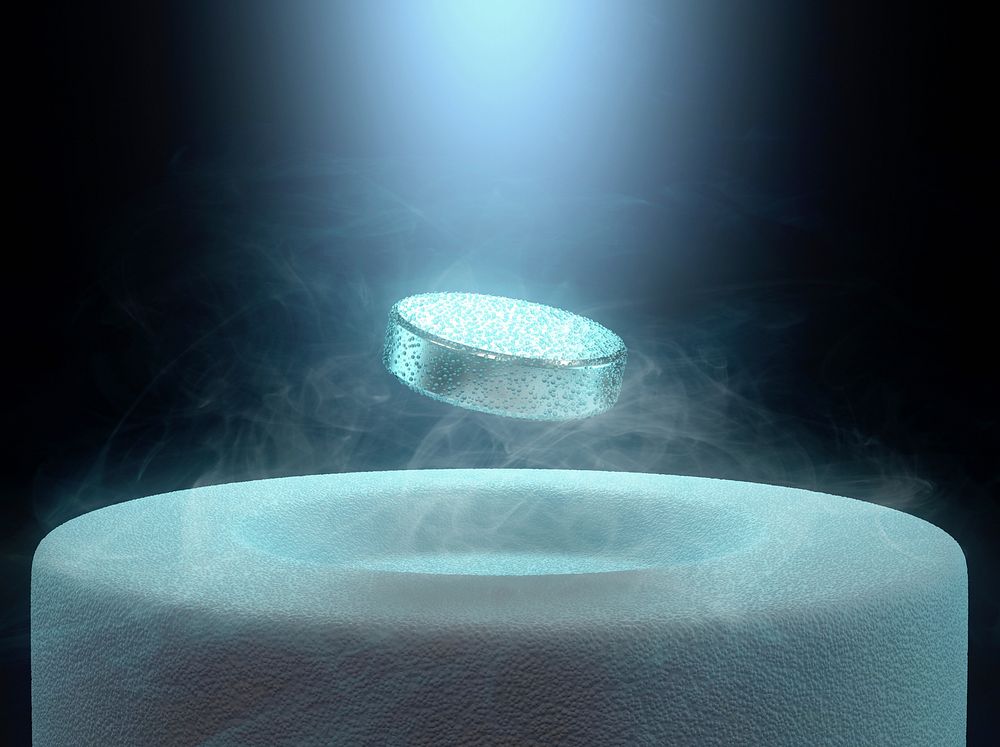
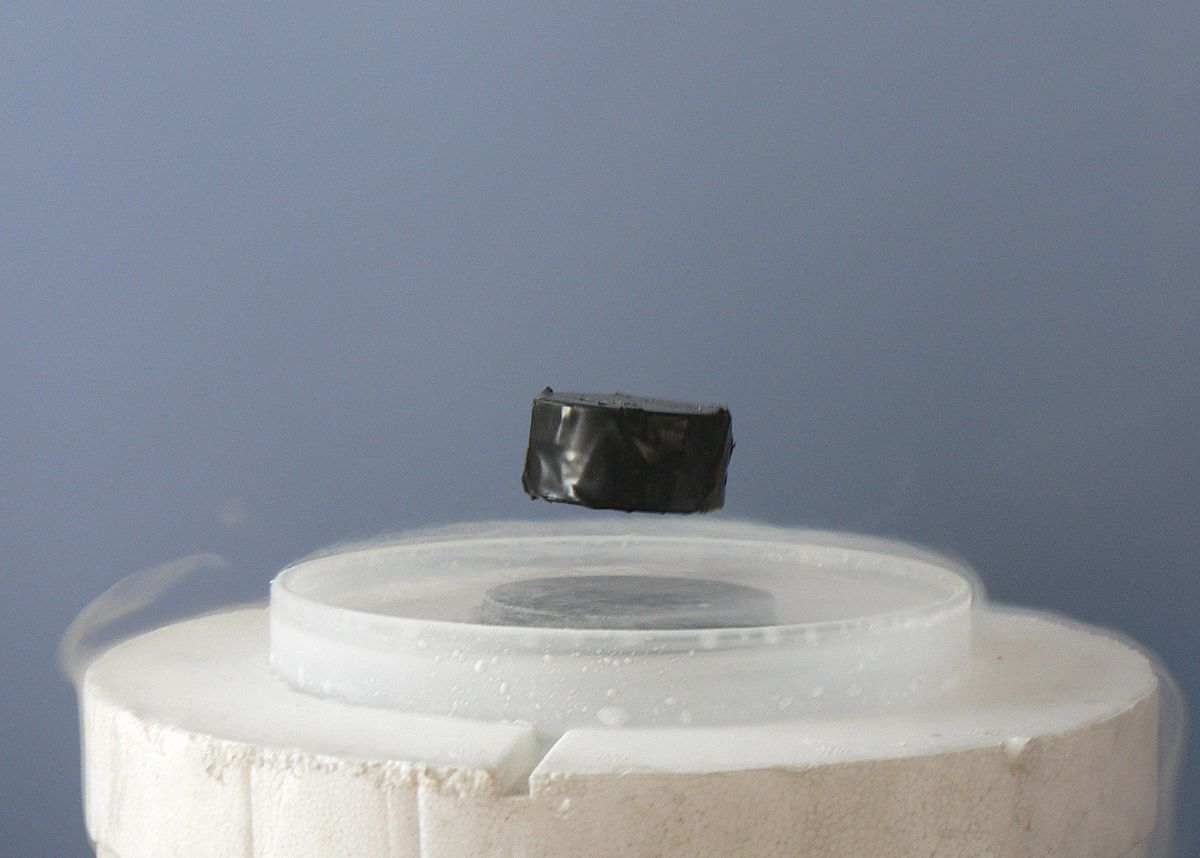
One of the most visual proofs of superconductivity is the Meissner effect, where the material expels all magnetic fields from its interior. This allows a superconductor to levitate above a magnet, creating a stable, frictionless cushion. This technology is already being used in high-speed Maglev trains that float above the tracks.
C. Type I versus Type II Superconductors
Type I superconductors are usually pure metals that lose their properties instantly when exposed to a strong magnetic field. Type II superconductors are more complex alloys that can handle much higher magnetic fields, making them ideal for powerful MRI machines and particle accelerators.
Breaking the Temperature Barrier
For over a century, the biggest hurdle in physics has been the “temperature problem” in superconductivity. Most known superconductors require expensive liquid helium to stay cold enough to function. Recently, researchers have discovered new classes of materials that can operate at much higher temperatures, using cheaper liquid nitrogen or even high-pressure environments.
A. Cuprates and the High-Temperature Revolution
Cuprates are ceramic materials containing copper oxide layers that shocked the scientific world by superconducting at temperatures far above what was thought possible. While they are brittle and difficult to manufacture, they proved that superconductivity is not limited to extreme cold.
B. Iron-Based Superconductors
These materials, discovered more recently, use iron—an element normally associated with magnetism—to achieve superconducting states. This was counterintuitive because magnetism usually destroys superconductivity, opening a new path for material design.
C. Hydrides and Extreme Pressure Breakthroughs
In recent years, hydrogen-rich compounds like lanthanum hydride have shown superconductivity at temperatures close to a standard room. However, these materials currently require pressures equivalent to the center of the Earth to work. The next step is finding a way to stabilize these “hot” superconductors at normal atmospheric pressure.
The Strange World of Topological Insulators
Topological insulators are a bizarre class of quantum materials that act as insulators on the inside but perfect conductors on their surface. This behavior is “topologically protected,” meaning the surface current cannot be easily disrupted by impurities or defects. These materials are considered the perfect candidates for building more robust electronic components that don’t overheat.
A. Surface States and Electron Spin
On the surface of a topological insulator, electrons move in a highly organized fashion where their direction of travel is locked to their spin. This “spin-momentum locking” prevents the electrons from scattering backward, which is the primary cause of heat in traditional electronics.
B. Robustness Against Material Defects
Unlike standard copper wires, where a tiny crack can ruin the connection, the surface current of a topological insulator flows around obstacles like water flowing around a rock. This makes them incredibly resilient for use in harsh environments or microscopic circuitry.
C. Quantum Anomalous Hall Effect
This exotic effect allows for the conduction of electricity along the edges of a material without any external magnetic field. It is a key area of research for developing low-power memory storage and next-generation logic gates.
Quantum Materials in Computing
The most anticipated application of these advancements is the creation of a truly scalable quantum computer. Traditional computers use bits (0s and 1s), but quantum computers use qubits, which can exist in multiple states at once. Quantum materials provide the physical platform needed to keep these delicate qubits stable and functional.
A. Josephson Junctions and SQUIDs
A Josephson junction consists of two superconductors separated by a thin barrier, allowing pairs of electrons to tunnel through. This is the building block of the Superconducting Quantum Interference Device (SQUID), the most sensitive tool we have for measuring magnetic fields.
B. Topological Qubits and Majorana Fermions
Majorana fermions are mysterious particles that are their own anti-particles, and they may exist at the ends of certain quantum wires. These particles could be used to create “topological qubits” that are immune to the noise and interference that usually crash quantum calculations.
C. Neuromorphic Computing Potentials
Some quantum materials can mimic the behavior of human neurons, allowing for a type of “brain-like” computing. This could lead to AI processors that are thousands of times more efficient than current silicon-based chips.
2D Materials and Van der Waals Heterostructures
Since the discovery of graphene, the study of two-dimensional (2D) materials has exploded. By stacking different 2D layers like Lego bricks, scientists can create “heterostructures” with properties that don’t exist in nature. This “twistronics” field is revealing that simply rotating one layer of atoms against another can trigger superconductivity.
A. Graphene and the Power of the “Magic Angle”
When two layers of graphene are stacked and twisted to a specific “magic angle” of about 1.1 degrees, the material suddenly becomes a superconductor. This discovery proved that the geometry of a material is just as important as its chemical composition.
B. Transition Metal Dichalcogenides (TMDs)
TMDs are a family of 2D materials that can be semiconductors, metals, or superconductors depending on their thickness. They are being explored for use in ultra-thin solar cells and flexible electronic displays.
C. Interlayer Excitons and Light-Matter Interaction
By trapping particles between layers of 2D materials, researchers can create “excitons” that interact strongly with light. This could lead to new types of lasers and optical communication devices that are faster than anything we use today.
The Role of High-Performance Synthesis
Creating these advanced materials requires precision at the atomic level. Scientists use sophisticated techniques to grow crystals one layer of atoms at a time, ensuring there are no mistakes in the structure. Without these high-tech “printing” methods, the exotic properties of quantum materials would remain trapped in mathematical equations.
A. Molecular Beam Epitaxy (MBE)
MBE is a technique where atoms are evaporated in a vacuum and deposited onto a substrate with extreme control. This allows for the creation of ultra-pure materials with custom-designed electronic properties.
B. Pulsed Laser Deposition (PLD)
PLD uses high-energy lasers to blast material off a target and onto a surface, creating complex oxide films. This is the primary method used to create the ceramic high-temperature superconductors used in research.
C. Chemical Vapor Deposition (CVD)
CVD is used to grow large sheets of 2D materials like graphene by reacting gases at high temperatures. This is the most scalable method for bringing quantum materials out of the lab and into industrial manufacturing.
Superconductivity in Energy Infrastructure
The most practical dream of this research is a zero-loss power grid. Currently, about 5% to 10% of all electricity generated is lost as heat during transmission through copper wires. Replacing these with superconducting cables would save enough energy to power entire countries without burning any extra fuel.
A. Superconducting Power Cables
Several cities have already installed trial versions of superconducting cables cooled by liquid nitrogen. These cables can carry ten times more power than a copper wire of the same size, making them perfect for crowded urban areas.
B. Superconducting Magnetic Energy Storage (SMES)
SMES systems store electricity in the magnetic field created by a circulating current in a superconducting coil. Because there is no resistance, the energy can be stored indefinitely and released almost instantly to stabilize the power grid.
C. Next-Generation Wind Turbines
Using superconducting magnets in wind turbines allows them to be much lighter and more efficient. This reduces the cost of offshore wind energy and makes renewable power more competitive with fossil fuels.
Spintronics: The Future of Data Storage
Traditional electronics move charge, but “spintronics” moves the spin of the electron. This allows for data storage that is much denser and faster than our current hard drives. Quantum materials are the essential ingredients for making spintronics a commercial reality.
A. Giant Magnetoresistance (GMR)
GMR is a quantum effect that allows for the reading of data from magnetic disks with incredible sensitivity. This technology, which won a Nobel Prize, is what allowed hard drives to shrink in size while growing in capacity.
B. Spin-Orbit Torque (SOT)
SOT uses the interaction between an electron’s movement and its spin to flip magnetic bits very quickly. This could lead to a new type of “universal memory” that combines the speed of RAM with the permanent storage of a hard drive.
C. Antiferromagnetic Spintronics
Most magnets have a “north” and “south” pole, but antiferromagnets have internal spins that cancel each other out. This makes them invisible to external magnetic fields, allowing for data storage that cannot be erased by accident.
Quantum Sensing and Metrology
Quantum materials aren’t just for building computers; they are also the world’s most sensitive sensors. Because quantum states are so delicate, they react to even the tiniest changes in their environment. This allows us to measure gravity, time, and magnetic fields with precision that was once thought impossible.
A. Quantum Diamond Sensors
Tiny defects in diamonds, called nitrogen-vacancy centers, can be used to sense magnetic fields at the scale of a single atom. These sensors are being used to map the electrical activity inside living human cells.
B. Atomic Clocks and Timekeeping
Quantum materials help stabilize the vibrations used in atomic clocks, which are essential for the GPS systems we use every day. More accurate clocks will allow for better navigation in space and more secure financial transactions.
C. Gravitational Wave Detection
Superconducting sensors are used in massive observatories to detect the tiny ripples in space-time caused by colliding black holes. This is opening a new window into the history of the universe.
Challenges in Scaling and Commercialization
Despite the excitement, we are still years away from seeing quantum materials in every home. The transition from a laboratory curiosity to a mass-produced product is full of engineering challenges. We must figure out how to make these materials cheaper, more durable, and easier to integrate with our current silicon technology.
A. The High Cost of Cooling Systems
Even “high-temperature” superconductors still need cooling, and the machines that provide that cooling are bulky and expensive. Finding a way to integrate miniature cooling systems into small devices is a major focus for engineers.
B. Material Fragility and Manufacturing
Many of the most promising quantum materials are ceramics or thin films that break easily. Developing flexible versions of these materials is necessary for use in wearable tech or long-distance power lines.
C. Integration with Silicon Technology
The world runs on silicon, and quantum materials don’t always play nice with standard computer chips. Creating a “hybrid” system that combines the best of both worlds is the most likely path forward for the tech industry.
Conclusion

The advancement of quantum materials is essentially the final frontier of physical science research. We are moving away from an era of discovery and into an era of practical application. Superconductivity remains the ultimate prize for solving the world’s growing energy crisis. Topological insulators offer a new way to design electronics that never get hot. Quantum computing will rely on these materials to achieve its true potential for solving problems. The discovery of 2D materials has given us a new toolkit for building atoms-thick devices.
High-pressure research is proving that room-temperature superconductivity is a physical possibility. Spintronics will fundamentally change how we store and process digital information. Quantum sensors are allowing us to see the world at a resolution we never imagined. The biggest hurdles remaining are the costs of cooling and the complexity of manufacturing. International collaboration is essential for funding the massive experiments needed in this field.
Every small breakthrough in the lab brings us closer to a revolutionary consumer product. We must remain patient as these complex technologies move through the stages of development. The environmental benefits of zero-loss energy transmission cannot be overstated for our future. Science is currently rewriting the textbook on what is possible in the material world. Our journey into the quantum realm is just beginning and the future looks incredibly bright.